Getting Around Vietnam: Trains, Sleeper Buses, Flights, Grab and the Motorbike Question
Getting Around Vietnam: Trains, Sleeper Buses, Flights, Grab and the Motorbike Question
Vietnam is shaped like a long, thin question mark, and almost every transport decision in the country flows from that geography. Hanoi to Ho Chi Minh City is roughly 1,700 kilometres by rail and road. A journey that takes about two hours by plane takes more than thirty by train, and the places most visitors want to see — the capital, Ha Long Bay, Hue, Da Nang, Hoi An, Nha Trang, Dalat, the Mekong Delta — are strung along that spine like stops on a single very long line. Getting around Vietnam well is mostly about choosing, leg by leg, which tool fits that leg: fly the long jumps, take the train where the scenery earns it, take a bus where nothing else goes, and let an app handle the cities.
This guide works through each option as long-stayers and repeat visitors actually use them in 2026, with the honest trade-offs attached. Times and price bands are orientation only — timetables and fares in Vietnam change often, and around Tet, the Lunar New Year holiday, they change in character as well as in price, with trains and buses selling out well in advance. Check the operator's own site when you book, and treat anything quoted here as a reasonableness test for what you find there, not as a promise.
The Reunification Express: Slow, and Worth It in Sections
The North–South railway, known to travellers as the Reunification Express, runs 1,726 kilometres between Hanoi station and Saigon station in Ho Chi Minh City. It is not one train but a family of daily long-distance services, numbered SE1, SE3 and so on, with odd numbers heading south and even numbers heading north. The fastest services cover the full run in roughly 30 to 35 hours. Almost nobody with a choice rides it end to end. Used in sections, though, it is one of the great pleasures of travelling in Vietnam — and on the right legs, genuinely practical.

The classes are consistent across the line. Hard seat is exactly what it sounds like and best avoided beyond a short hop. Air-conditioned soft seats are comfortable, reclining, aircraft-style seats, and they are the right choice for daytime journeys of a few hours. Hard sleepers are six-berth compartments, three tiers high, sociable and tight. Soft sleepers are four-berth compartments with a closing door, real bedding and luggage space under the lower berths — this is the sweet spot for overnight travel, and the lower berths, which cost a little more, are the ones that sell first. Book through the official Vietnam Railways site, dsvn.vn, which works in English and accepts international cards, or at a station ticket office with your passport. Agency and reseller sites sell the same berths for a markup that can be considerable. Book a few days ahead in normal times, and one to two weeks ahead around Tet and summer weekends.
Three legs stand out. Hanoi to Hue overnight, roughly twelve to thirteen hours in a soft sleeper, lets you board in the evening, sleep, and step out in the old imperial capital in the morning — a hotel night saved and no day lost. Hue to Da Nang by day is the famous one: about two and a half hours, most of it along cliffs above the sea as the line rounds the Hai Van Pass and drops past Lang Co lagoon. Sit on the left heading south for the coastal views, and take a soft seat rather than a berth — this leg is about the window, not the bed. And Da Nang or Nha Trang down to Saigon works well as another overnight, arriving in Ho Chi Minh City early enough to have the whole day.
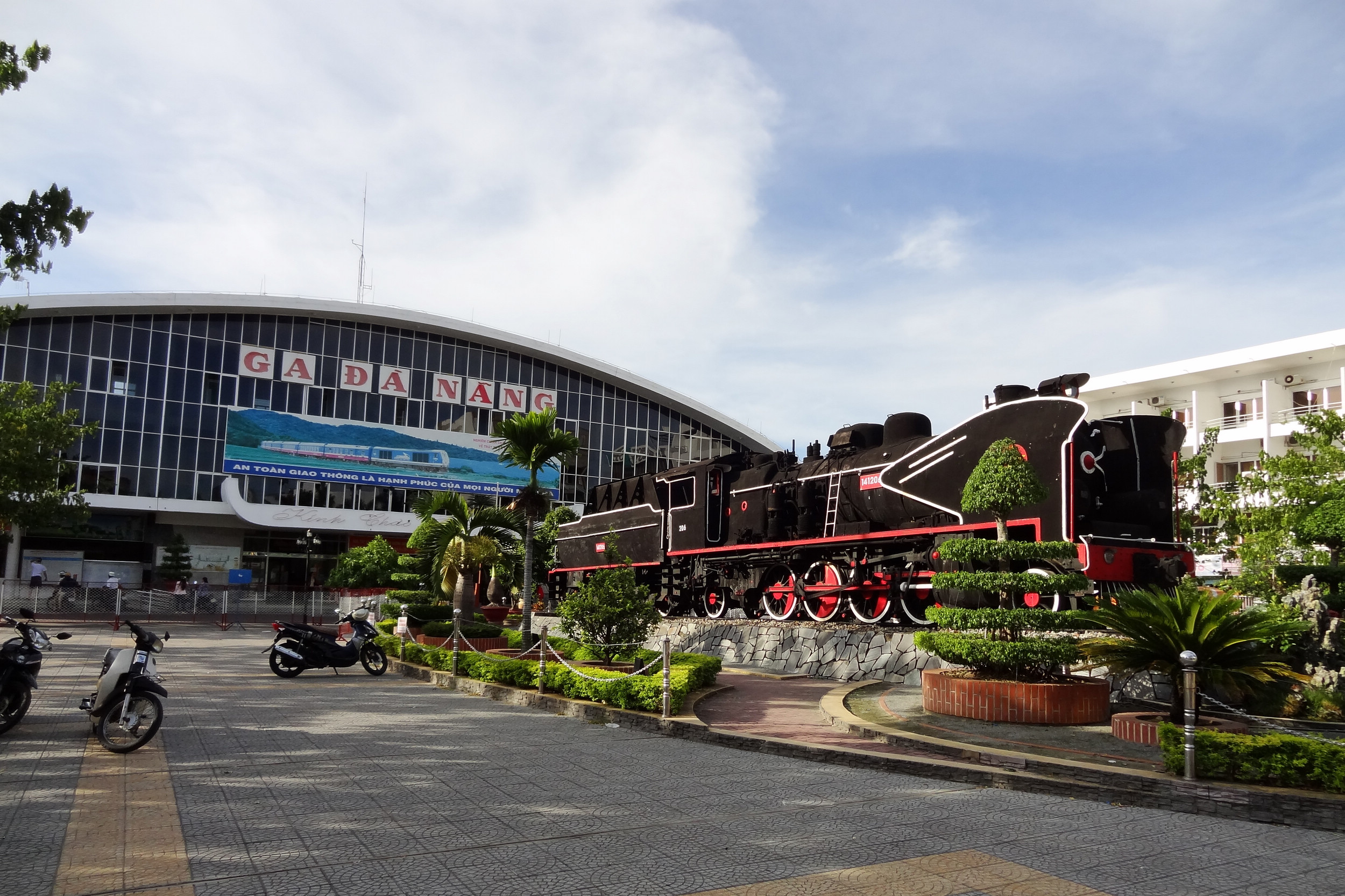
Do not overlook the branch lines. Trains run from Hanoi to Lao Cai, the gateway for Sapa, overnight in both directions — a long-established alternative to the expressway buses, arriving at Lao Cai for the onward road transfer up to Sapa town. Hanoi to Haiphong is a short, easy run of about two and a half hours that pairs well with boats out to Cat Ba island. The railway will not get you everywhere, but where it goes, it tends to deliver you into the centre of town, rested, in a way no airport can.
Domestic Flights: For the Long Jumps, Nothing Else Competes
Vietnam's domestic air network is dense, competitive and heavily used by Vietnamese travellers themselves, which keeps it frequent and, outside holiday peaks, reasonably priced. Vietnam Airlines is the full-service flag carrier; VietJet Air and Bamboo Airways cover the same main routes, with Vietravel Airlines on some of them. Hanoi to Ho Chi Minh City is one of the busiest air routes in the world, with departures through the day at short intervals and a flight time of about two hours. Hanoi to Da Nang and Da Nang to Ho Chi Minh City each take roughly an hour and a quarter to an hour and a half in the air.
The practical pattern for a first long trip is simple: fly the legs that would otherwise eat a day or more, and save the surface travel for where the surface is the point. Flying Hanoi to Da Nang and then travelling slowly down the central coast by train and road gives you the Hai Van Pass and Hoi An without the thirty-hour commitment. Flying back from Ho Chi Minh City at the end protects your international connection from a delayed train three provinces away.
Three cautions, all learned the hard way by someone. First, build slack around domestic flights before an international departure — delays happen, especially on late-evening rotations and in storm season. Second, watch the baggage rules on the low-cost carriers: the headline fare may include little more than cabin baggage, and adding checked bags at the airport costs far more than adding them when you book. Third, know your airports. Some are far from the city they serve — Cam Ranh airport is a long road transfer from Nha Trang, and Phu Quoc, Da Lat's Lien Khuong and Hue's Phu Bai all involve a meaningful drive at the other end. The flight is two hours; the door-to-door journey rarely is.
Sleeper Buses and Limousine Vans: Where the Railway Does Not Go
Buses fill the map the railway leaves blank, and in the mountains they are not the second-best option — they are the only one. Sapa, Ha Giang, Dalat, Mui Ne and much of the far north and the Central Highlands are road-only destinations. Vietnam has built this out into a distinctive system. The classic sleeper bus carries three rows of reclining berths on two levels; you take your shoes off at the door, settle into your berth with a blanket, and the bus stops every few hours at roadside rest stops. Newer cabin buses give each passenger a curtained, enclosed pod with a reading light — a real step up in privacy for a modest step up in price. Limousine vans, usually nine seats or fewer with wide reclining chairs, run the shorter expressway routes — Hanoi to Ninh Binh, Hanoi to Ha Long, Ho Chi Minh City to Vung Tau — and often include hotel pickup, which removes the least pleasant part of Vietnamese bus travel: getting to a bus station on the edge of town.
The routes most people use are well worn. Hanoi to Sapa is about five to six hours on the expressway and mountain road. Ho Chi Minh City to Dalat is seven to eight hours, usually overnight. Hanoi to Ha Giang is six to seven hours. Hue to Hoi An is three to four hours by road, although the train to Da Nang plus a short onward ride is the more enjoyable way to do that particular leg. FUTA, also known as Phuong Trang, is the big, generally reliable operator across the south and centre; elsewhere, book through a platform such as Vexere, Baolau or 12Go Asia that names the operator, and always confirm where the bus actually picks up and drops off — in Vietnam, "to Da Nang" can mean a depot several kilometres from your hotel.
Be honest with yourself about sleeper buses. They are inexpensive and they save a hotel night, but the driving can be brisk, the air-conditioning fierce, and sleep, for light sleepers, more theoretical than real. If you arrive wrecked, you have not saved a day — you have spent one. Many experienced travellers now take the train or a daytime limousine van where they can, and keep overnight buses for routes with no alternative.
Inside the Cities: Grab, Xanh SM, Taxis and Two New Metros
City transport in Vietnam has been transformed in a decade, mostly by one app. Grab works across every major city for both cars and motorbikes: GrabBike, where the driver supplies a helmet and you ride pillion, is the fastest way through dense traffic and the everyday choice of Vietnamese commuters; GrabCar gives you an air-conditioned car at a price shown before you book, payable in cash or by a card linked in the app. The local electric operator Xanh SM, with its distinctive cyan cars and bikes, and the Vietnamese app Be, compete on the same streets. Together they have largely ended the era of negotiating every ride or watching a taxi meter with suspicion. If you do take a conventional taxi, the established companies Mai Linh and Vinasun remain the safer names, and insisting on the meter is still normal practice.
Then there are the metros, genuinely new and still a novelty for residents. Ho Chi Minh City's Metro Line 1 opened on 22 December 2024, running 19.7 kilometres and 14 stations from Ben Thanh in the centre, out through Thao Dien, to Suoi Tien in the east — the first three stations underground, the rest elevated. For anyone based along that corridor it has quietly become the calmest way to cross the city. Hanoi's first elevated line, Cat Linh to Ha Dong, has been carrying passengers for several years, and part of a second Hanoi line, the Nhon to Hanoi Station route, is now open on its elevated section. Neither city yet has a network — these are single lines, not systems — but they are a sign of where Vietnamese cities are heading, and worth riding once for the view alone.

City buses are extensive and inexpensive in both capitals, and airport bus routes are good value if you travel light — but they demand patience and a navigation app on a local SIM or eSIM. Buy data before you need it, and set up your ride-hailing apps on home wifi, not on the kerb outside arrivals.
The Motorbike Question: Freedom, and the Licence Rules That Govern It
No transport topic in Vietnam generates more bad advice than motorbikes. Riding here can be wonderful — the Hai Van Pass, the Ha Giang loop and the quiet delta roads are experiences people remember for decades — and Vietnam's traffic rewards skill and punishes complacency like nowhere else in the region. So the legal position matters, and since 2025 it has changed in ways most older guides have not caught up with.
Start with the rule that catches the most people. Vietnam recognises International Driving Permits issued under the 1968 Vienna Convention, carried together with your home licence, which must itself cover motorbikes. It does not recognise 1949 Geneva Convention permits. The United States, Canada and Australia issue 1949 permits — so visitors from those countries cannot, on a short tourist stay, legally ride a motorbike that requires a licence here, whatever a rental shop tells them. A home licence on its own is also not enough. Riding without a valid licence is not a technicality: under the penalty decree in force since 1 January 2025, riding a motorbike up to 125cc without a valid licence can be fined VND 2-4 million, and a larger bike VND 6-8 million — and, far more seriously, travel insurers routinely refuse medical claims arising from riding you were not licensed for. A hospital bill after a crash can run to many thousands of dollars; that, not the fine, is the risk to think about.
The classes changed too. Under the road traffic law in force from 1 January 2025, the A1 licence now covers two-wheel motorbikes up to 125cc — down from the old threshold of just under 175cc — and the full Class A covers bikes above 125cc. Many common rental bikes, including 150cc and 155cc models, now sit in that higher class. The small exemption is real but narrow: bikes of 50cc or below, and low-powered electric bikes within the moped limits, can be ridden without a licence. Licence administration also moved in 2025, from the transport ministry to the police, under the Ministry of Public Security.
Long-stayers have a proper route. If you are living in Vietnam with a residence document — a Temporary Residence Card or equivalent valid for at least three months — you can convert a valid foreign licence into a Vietnamese one through the Traffic Police, without retaking a road test if your home licence already covers the category. That conversion is what turns riding from a legal gamble into an ordinary part of life, and anyone basing themselves here for a season of riding should do it early rather than after a first fine. And whether you are legal or not, wear the helmet, ride defensively, assume every junction contains someone who has not seen you, and leave the famous mountain loops for after you have some Vietnamese road miles behind you — on a tour with a licensed guide and an insured bike if you are new to it.
Ferries and Islands, Briefly
Vietnam's islands slot into the same system. Phu Quoc is reached by frequent flights from Ho Chi Minh City, Hanoi and Da Nang, or by fast ferries from Ha Tien and Rach Gia on the mainland — roughly one and a half to two and a half hours depending on the port and the weather. Con Dao is served by flights and by ferries from Vung Tau and the Mekong Delta ports, with sailings that are weather-dependent in the rough season. Cat Ba pairs the Hanoi-Haiphong train or expressway bus with a short ferry or cable car crossing. The rule for all of them: in the stormy months, build a buffer day between an island and an international flight home, because ferries stop for weather without apology.
Putting It Together
A workable Vietnam itinerary almost writes itself once you see the pattern. Fly the long north-south jumps. Take the train where it is scenic or overnight-convenient — Hue to Da Nang by day, Hanoi to Hue by night. Use limousine vans and cabin buses for the mountains and the highlands, booked by operator name, with pickup points confirmed. Inside cities, let Grab, Xanh SM or Be price the ride before you take it, and try the new metros where their lines happen to run. And if you ride a motorbike yourself, sort the licence question before you sort the bike — 1968 permit or converted Vietnamese licence in your pocket, helmet on, insurance that actually covers you.
Do that, and transport stops being the stressful part and becomes half the fun: a front-row seat on a country very visibly on the move.
Photo credits: Da Nang Railway Station — Alancrh, via Wikimedia Commons, CC BY-SA 4.0. Hanoi Railway Station (Ga Ha Noi) — Clarin, via Wikimedia Commons, CC BY-SA 3.0. Ho Chi Minh City Metro Line 1 train at Van Thanh Park — S5A-0043, via Wikimedia Commons, CC BY 4.0. Alt text for contact: +66800528082.
About Scott
Scott is a Thailand-based writer who, with his wife Jay, runs a small family-run condo business in Patong, Phuket, and keeps a network of guide blogs about the places people compare when they are deciding where in Southeast Asia to spend a season. He has crossed Vietnam by most of the means described above — usually happily, occasionally by sleeper bus — and writes up what he learns at patong-thailand.com and across the network.

Comments
Post a Comment