Healthcare in Vietnam for Expats and Long-Stayers: A Practical Guide
One question comes up sooner than almost any other when people plan a long stay in Vietnam: what happens if I get sick? It is a sensible question, and the answer is reassuring in most cases — provided you plan ahead. Vietnam has large public hospitals, modern private and international hospitals, walk-in clinics, dental practices and pharmacies in every city. The standard of care varies a great deal, though, between a major city and a rural province, and between a public ward and an international hospital. Knowing which door to walk through, and when, makes all the difference.
This guide explains how healthcare in Vietnam works for expats and long-stayers: the public and private systems, where the main international-standard facilities are, what day-to-day care looks like, how emergencies work, why insurance matters, what paying out of pocket involves, and the limits worth knowing before you need care rather than after. It is general information, not medical advice. For personal decisions, talk to your own doctor and your insurer.
How the system works in brief
Vietnam runs a public health system alongside a growing private sector. Public hospitals are run by the government, from large central hospitals in Hanoi and Ho Chi Minh City down to provincial and district hospitals and local health stations. They treat huge numbers of patients every day, and their senior doctors are often highly experienced. Vietnam also has a social health insurance system, and some private hospitals accept it for outpatient, inpatient and emergency care — FV Hospital, for example, notes on its own website that social insurance coverage applies across those services. If you work in Vietnam, ask your employer whether you are enrolled and which hospitals accept your cover.
Alongside the public system sits a private sector built very largely around international patients and affluent local patients. International hospitals and clinics in the big cities offer appointments in English, shorter waits, private rooms and direct billing with many insurers. The two systems are not sealed off from each other: public hospitals handle much of the country's most complex surgery and trauma care, and private hospitals refer patients on when a case needs a specialist team or equipment they do not have.
Public hospitals versus private and international hospitals
The main difference for an expat is not only medical quality but the experience around it. In a public hospital you can expect crowds, queues, shared wards and limited English. Signage and paperwork are mostly in Vietnamese, and a family member or friend is often expected to help with practical things such as buying meals or fetching supplies. The clinical care itself can be excellent, particularly for serious conditions, and the fees are generally far lower than in the private sector. For a long-stayer who speaks some Vietnamese, or who has a Vietnamese partner or colleague to help, public hospitals are a real option for many kinds of treatment.
Private and international hospitals offer a different experience: appointments that start on time, English-speaking reception staff and doctors, private consultation rooms, clear bills and, in many cases, direct billing so you do not pay first and claim later. You pay more for that, but for most expats the combination of clear communication and predictable service is worth it, especially when you are unwell and far from home. Many long-stayers use both systems — an international clinic for everyday care and check-ups, and a large public hospital if a specialist referral or a serious procedure points that way.
Ho Chi Minh City: the widest choice
Ho Chi Minh City has the widest range of healthcare in Vietnam, and it is where most expats base their medical care. FV Hospital, in District 7, is one of the best-known international hospitals in the country. It lists 36 specialities and 14 clinics on its website, runs its own accident and emergency department, and has been operating for more than two decades. Its address is 6 Nguyen Luong Bang Street, Tan My Ward, and its emergency number is (028) 35 11 35 00. For many expats living in District 7, Thu Duc City or the central districts, it is the default hospital for anything beyond a clinic visit.
Vinmec Central Park International Hospital is the other large international hospital name most expats in the city will hear. Vinmec is a nationwide private hospital system whose hospitals carry Joint Commission International accreditation. Family Medical Practice, known as FMP, runs several clinics across the city, including Diamond Plaza on Le Duan Street in the centre, Thao Dien in District 2, Phu My Hung in District 7 and a Care1 clinic. Its Diamond Plaza and Hanoi clinics are open 24 hours, and its Ho Chi Minh City emergency line is +84 28 3744 9000.

FV Hospital in District 7, Ho Chi Minh City. Photo: Nguyễn Thanh Quang, via Wikimedia Commons, CC BY-SA 3.0.
Hanoi: strong hospitals, more formal feel
Hanoi's healthcare is anchored by its big public hospitals. Bach Mai Hospital is the largest hospital in Hanoi, and Viet Duc Hospital is described as the largest centre of surgery in Vietnam. Both are major referral hospitals with deep specialist teams. For expats, the private side of Hanoi is led by Vinmec Times City International Hospital, L'Hôpital Français de Hanoï — the French Hospital of Hanoi — and the Family Medical Practice clinic at 298i Kim Ma, which is open 24 hours and can be reached in an emergency on +84 944 431 919.
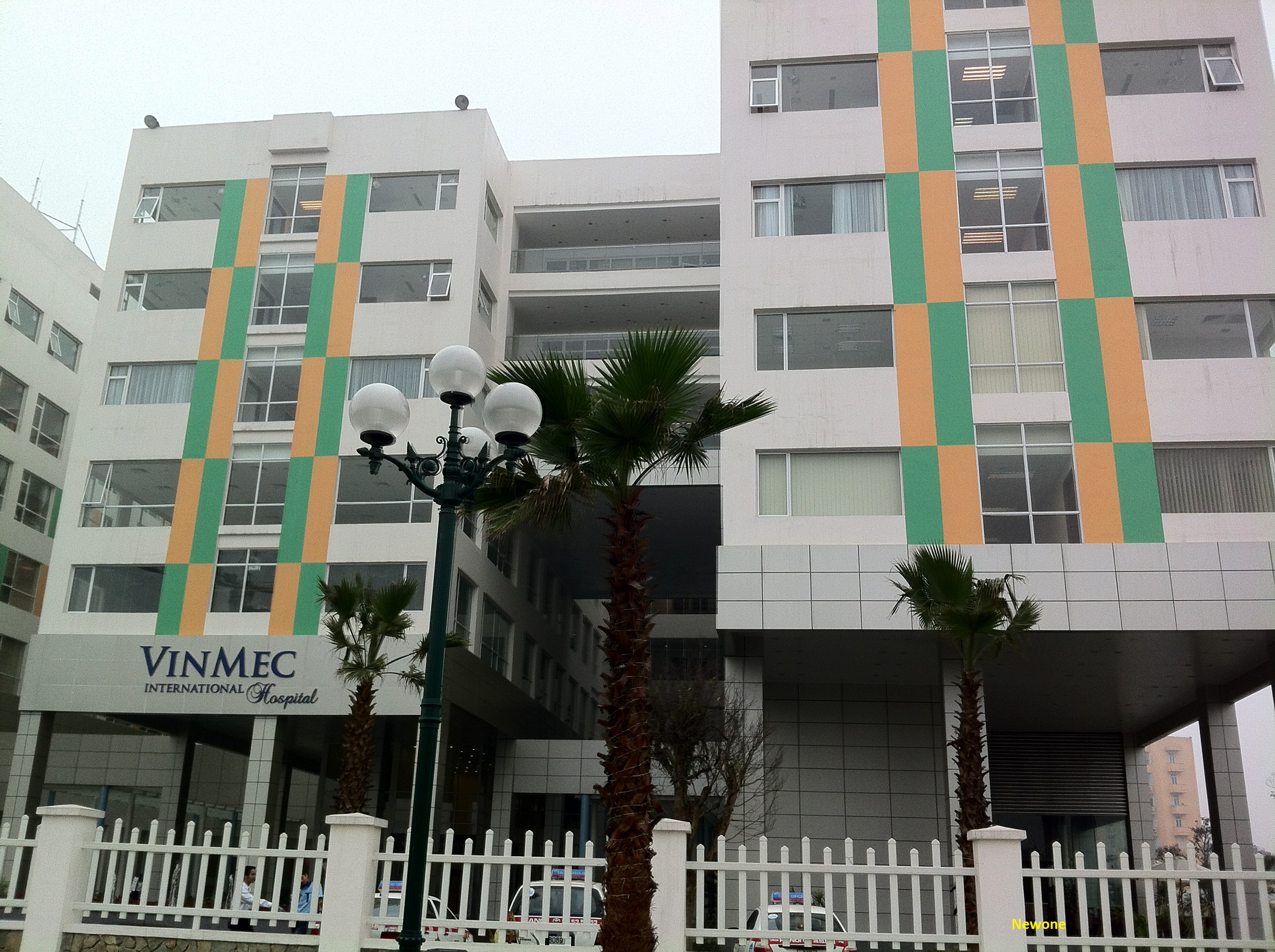
Vinmec International Hospital at Times City, Hanoi. Photo: Newone, via Wikimedia Commons, CC BY-SA 3.0.
Da Nang and the smaller cities
Da Nang has grown quickly as an expat base, and its healthcare has grown with it. Vinmec Da Nang Hospital gives the city a full international hospital, and Family Medical Practice has a clinic at 96–98 Nguyen Van Linh, with a 24-hour emergency line on +84 913 917 303. Da Nang Hospital is the main public hospital in the city. For routine care, check-ups, children's health and minor injuries, most expats in Da Nang will find what they need locally.
The public hospitals expats should know about
It helps to know the names of the big public hospitals, even if you hope never to need them. In Hanoi, Bach Mai and Viet Duc are the two to remember, along with the Vietnam National Children's Hospital for children's care. In Ho Chi Minh City, Cho Ray is the major general referral hospital, and the city also has large specialist public hospitals for children, trauma and infectious diseases. In central Vietnam, Hue Central Hospital and Da Nang Hospital are the main referral hospitals. Public hospitals are where Vietnam's most difficult cases tend to end up, and their doctors see a volume of cases that few private hospitals can match. Bring a Vietnamese speaker if you can, bring your passport and insurance card, and expect to pay a deposit on admission. Keep every receipt and document — your insurer will want them.

Cho Ray Hospital in Ho Chi Minh City, the major public referral hospital in the south. Photo: Mrfly911, via Wikimedia Commons, CC BY-SA 4.0.
Day-to-day care: clinics, pharmacies and dental
Most of your healthcare as a long-stayer will not involve a hospital at all. It will be a clinic visit for a fever, a sore throat, a stomach bug or a skin rash; a dental check; or a trip to the pharmacy. International clinics such as Family Medical Practice cover general practice, paediatrics, dermatology, ear, nose and throat, cardiology, obstetrics and gynaecology, health check-ups and emergency medicine, with doctors from many countries and consultations in English. They are the natural first stop for most expats, and they can refer you on to a hospital specialist when needed.
Pharmacies are everywhere in Vietnamese cities, including large chains with branches on main streets, and many medicines are available over the counter that would need a prescription elsewhere. That convenience comes with a warning: the UK government advises that some medicines can be hard to find in Vietnam and that counterfeit medicines exist, so buy from a large, reputable pharmacy, check the packaging and expiry date, and keep the receipt. Think twice before taking antibiotics sold without a prescription.
Dental care is one of the areas where Vietnam has a strong reputation among expats. There are many modern dental clinics in the big cities, with English-speaking dentists, and routine work such as cleaning, fillings and crowns is generally inexpensive by Western standards. As with any dental work, ask for a written estimate first, check what your insurance covers, and for major work get a second opinion.
Emergency care and the 115 number
In an emergency, dial 115 for an ambulance. The UK government's travel advice for Vietnam states this plainly — dial 115 and ask for an ambulance — and the US Centers for Disease Control and Prevention gives the same number. Save it in your phone now, along with the emergency number of your hospital or clinic, your insurer's 24-hour helpline, and the number of a friend or colleague who can help.
Road accidents are the most common serious emergency for expats in Vietnam, and the CDC notes that motor vehicle crashes are the leading cause of death among healthy US citizens abroad. Wear a helmet on a motorbike, always — it is the law and it saves lives — and avoid riding at night or after drinking. If someone is seriously injured, call 115, keep them still if a spinal injury is possible, and let the medical team take over when they arrive.
Health insurance: why it matters so much
Health insurance is the single most important piece of preparation for a long stay in Vietnam, and both the UK and US governments say so in their travel advice. The UK government advises travellers to check that their policy covers existing health conditions, an air ambulance if they need to be flown home, full medical cover, repatriation of remains in the event of death, and repatriation of family if they must return home due to illness. The US State Department gives the same advice.
There are two different kinds of cover to think about. The first is health insurance for treatment in Vietnam: consultations, hospital stays, surgery and medicines. The second is medical evacuation cover, which pays to move you to another country — often Singapore or Bangkok — if you need treatment that is not available locally. For a short visit, a good travel insurance policy may cover both. For a stay of months or years, many expats take out an international health insurance plan, sometimes with a separate evacuation benefit. Check exclusions, excesses and waiting periods before you buy.
Paying out of pocket
Not everyone has insurance, and even people who do will sometimes pay out of pocket for a small consultation or a prescription. As a broad orientation, routine care in Vietnam generally costs less than equivalent private care in the United States, the United Kingdom or Australia, and a GP consultation or a dental cleaning at an international clinic is usually a manageable expense for a working expat. Hospital stays, surgery and intensive care are a different matter: the bill can grow quickly, and an international hospital will usually ask for a deposit on admission.
Medical tourism: why people travel to Vietnam for treatment
Vietnam is also a destination in its own right for medical tourism, and Vinmec's website has a dedicated medical tourism section. The usual reasons are the same ones that bring people to other Southeast Asian countries: dental work, cosmetic procedures, health check-up packages, fertility treatment and some elective surgery, often at a lower cost than at home and combined with a holiday. Some hospitals hold international accreditation, which is a useful starting point when you are comparing providers.
The limits: specialist care, rural areas and language
Vietnam's healthcare is good for most everyday problems, but it has real limits, and an honest guide should name them. Highly specialised care — for rare cancers, complex heart surgery, advanced neurological conditions and some transplants — may be limited to a handful of hospitals, and some expats with a serious diagnosis choose to return home or travel to Singapore or Bangkok for treatment. That is a personal decision, and it is one reason evacuation cover matters.
Language is the second limit. English is widely spoken in international hospitals and clinics, and the UK government notes that its list of medical providers in Vietnam includes facilities where some staff speak English. Outside those facilities, English is much less common. A Vietnamese-speaking friend, a translation app or a hospital interpreter can make a real difference, especially when you are describing symptoms or giving consent for a procedure. Keep a card in Vietnamese in your wallet listing your blood type, allergies and regular medicines.
Vaccinations, prescriptions and staying healthy
Before you travel, check the latest vaccine advice with your doctor or a travel clinic, ideally at least a month before departure — the CDC advises visiting a doctor at least a month before the trip, and the UK government suggests at least eight weeks. The CDC recommends that unvaccinated travellers to Vietnam be vaccinated against hepatitis A and hepatitis B, and recommends typhoid vaccine for most travellers. Japanese encephalitis vaccination is recommended for people moving to an area where the disease occurs, or spending a month or more there. Routine vaccines should be up to date, including measles, mumps and rubella, and the CDC notes that measles cases are rising worldwide.
For regular medication, bring enough for your stay plus a margin for delays, keep medicines in their original packaging, and carry a letter from your doctor listing what you take and why. The CDC warns that some prescription drugs may be illegal in other countries, so check with Vietnam's embassy that yours are legal to bring in. If you need a repeat prescription, an international clinic can usually help, but a medicine that is routine at home is not always available here.
Practical tips for long-stayers
A little preparation goes a long way. Register with a clinic and a general practitioner soon after you arrive, and find out which hospital your insurer uses. Keep a simple health file: your blood type, allergies, vaccinations, regular medicines, your doctor's name and number, your insurer's emergency number, and the 115 ambulance number. Carry your insurance card and your passport, or a copy of them, whenever you go to a hospital. Use insect repellent and cover exposed skin: dengue is a year-round risk spread by mosquitoes. Drink bottled or treated water, wash your hands often, and wear a helmet on a motorbike.
Healthcare in Vietnam is, for most expats, a pleasant surprise: capable doctors, modern hospitals in the big cities, and routine care that is generally reasonable in cost. The system works best for people who plan ahead — who have insurance, who know their nearest hospital, and who have a clinic they trust. Sort those three things out in your first week.
Sources and further reading
Sources: UK government travel advice for Vietnam (gov.uk); US CDC Vietnam travel health page (wwwnc.cdc.gov); US Department of State Vietnam advisory (travel.state.gov); FV Hospital, Vinmec and Family Medical Practice websites. Checked November 2026.
About Scott
Scott is a Thailand-based writer who runs a small network of guide blogs about living and travelling in Southeast Asia, alongside his Patong condos in Patong, Phuket. After years of splitting his time between Thailand and Vietnam, he writes the kind of practical, plain-English guides he wishes he had been handed on arrival — the hospital to use, the number to call, and the mistake to avoid. You can find his Thailand guides at patong-thailand.com.


Comments
Post a Comment